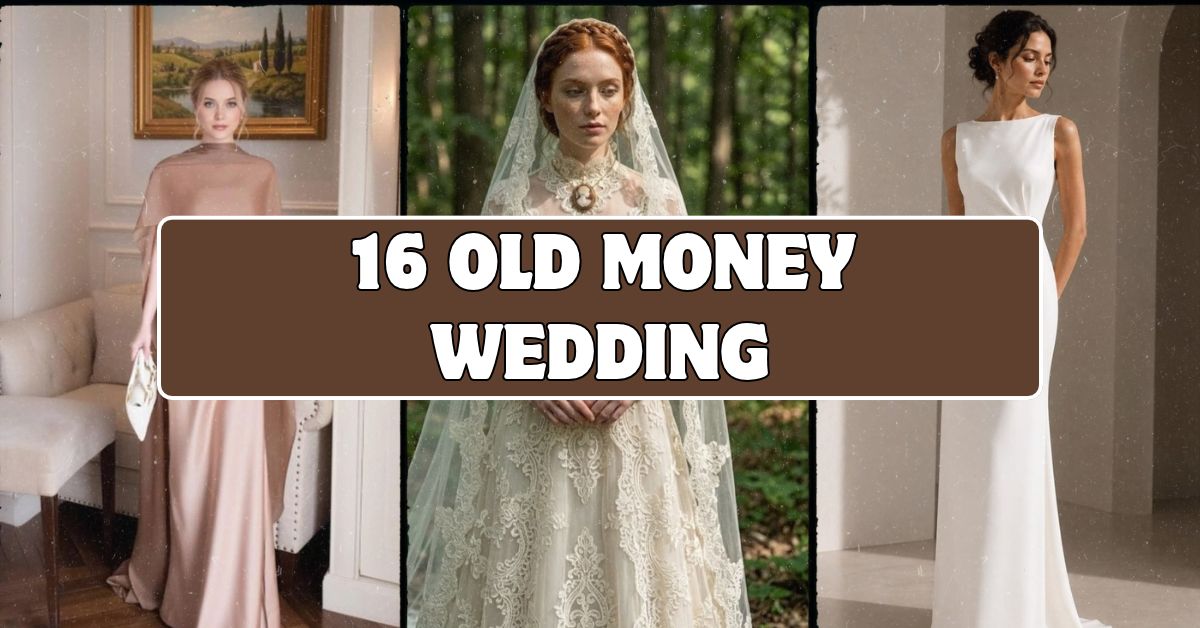
I’ve spent years digging through bridal runways, real wedding albums, and the kind of family photo archives that never make it to Pinterest, and that research is exactly why I trust myself to break down the old money wedding aesthetic the right way. I know what separates “quiet luxury” from a costume, and I’m going to show you the difference piece by piece.
So what actually makes an old money wedding look work? It relies on tailored silhouettes, natural fabrics like silk, linen, and crepe, muted neutral tones, and heirloom-style jewelry instead of flashy logos. The whole point is quiet elegance, never loud luxury.
Stick with me, because I’m about to walk you through 16 distinct ways to pull this look off, whether you’re the bride, a bridesmaid, the groom, or just a guest trying to nail the dress code.
What Does “Old Money” Really Mean for a Wedding?
Before we get into the looks themselves, let’s talk about what this aesthetic actually is, because it gets misunderstood a lot. Old money style isn’t about spending the most money. It’s about looking like you’ve had nice things for generations, not like you bought them yesterday. Think tailored lines, soft color palettes, and fabrics that drape instead of shine. No big logos, no over-the-top embellishment, no trendy cutouts. It’s the wedding version of a well-worn cashmere sweater passed down from grandma. Comfortable, classic, and quietly expensive looking even when it isn’t.
1. The Quiet Luxury Silk Gown

This is the gown that whispers instead of shouts. A fluid silk crepe or silk charmeuse slip gown with a bias cut skims the body without clinging in the wrong places.
Best for: Pear and hourglass shapes who want movement without heavy structure.
Venue fit: Indoor estate weddings, historic mansions, or intimate courthouse ceremonies.
Season: Late spring through early fall, since silk breathes but isn’t great in freezing temps.
Fabric weight: Light to medium, usually 16 to 19 momme silk.
Accessories: A thin gold bracelet, pearl drop earrings, and a low chignon instead of a big headpiece.
Book your fitting at least three months out since bias-cut silk needs a skilled tailor for alterations. Rushed hems on silk often pucker. This look sets the tone for the next one, which leans into texture instead of shine.
2. Cathedral Lace Heirloom Dress

Lace has old money written all over it, but the trick is choosing Chantilly or Alençon lace over anything with heavy sequins or beading. A long sleeve bodice with a cathedral train feels borrowed from a great-grandmother’s closet, even if it’s brand new.
Best for: Any body type, since long sleeves and a defined waist balance most proportions.
Venue fit: Church weddings, cathedral ceremonies, formal estate gardens.
Season: Fall and winter, since long sleeves add warmth.
Fit notes: Expect 3 to 5 fittings over 4 months for lace appliqué adjustments.
Accessories: A detachable train, fingertip veil, and simple drop earrings.
Alterations on lace gowns run higher than plain fabrics, usually $400 to $900, because lace motifs need hand-matching at the seams. This leads nicely into a simpler, more tailored silhouette for brides who want less drama.
3. Tailored Crepe Column Gown
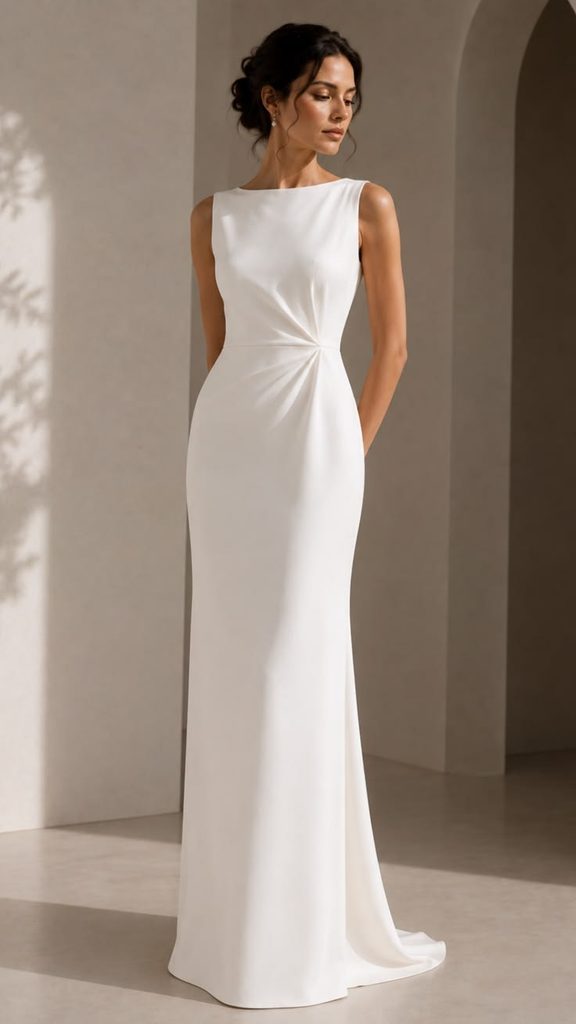
Crepe is the unsung hero of old money dressing. It holds structure without stiffness, and a column silhouette with a boat neckline looks like it belongs in a 1960s Grace Kelly photograph.
Best for: Tall and petite brides who want a streamlined look without volume.
Venue fit: Courthouse weddings, small chapel ceremonies, black-tie receptions.
Season: Works year-round with the right layering.
Fabric weight: Medium weight crepe, structured but not stiff.
Accessories: Elbow-length gloves, a single strand pearl necklace, low block heels.
For winter weddings, add a cashmere or wool wrap in ivory or camel instead of a faux fur stole, since real texture reads more authentic. This minimalist gown pairs beautifully with the next look, which brings in a softer, more romantic mood.
4. Preppy Garden Party Bride

Think tea-length dress, eyelet lace or dotted Swiss cotton, and a wide-brim straw hat. This look channels Nantucket summers and country club lawns.
Best for: Petite and athletic builds since the tea length shows off the leg without overwhelming a smaller frame.
Venue fit: Garden weddings, backyard ceremonies, coastal estates.
Season: Summer only, this fabric is too light for anything under 60 degrees.
Accessories: Low kitten heels or flat sandals, a straw clutch, delicate gold hoops.
Have your alterations appointment scheduled four to six weeks before the wedding since cotton and eyelet shrink slightly after pressing. This breezy daytime look transitions well into a more structured option for brides getting married somewhere with a dress code.
5. Tweed Blazer Bridal Look

For a fall or winter wedding, a tweed jacket worn over a simple slip dress or paired with tailored trousers gives serious equestrian, old-money energy.
Best for: Brides who want a non-traditional, fashion-forward moment, any body type works since the blazer structure creates its own shape.
Venue fit: Barn weddings, countryside estates, rustic venues with a polished twist.
Season: Fall and winter exclusively.
Fabric weight: Heavy, wool tweed with silk or satin lining.
Accessories: Leather gloves, riding boots or pointed-toe pumps, a brooch pinned at the lapel.
This is a great reception outfit change too, so talk to your tailor about a slightly looser fit if you’re switching dresses mid-day. Up next is a look that keeps things soft and minimal instead of structured.
6. Pearl-Embellished Minimalist Gown

A plain satin or crepe gown scattered with small, scattered pearls (not crystals) feels heirloom without feeling busy.
Best for: Hourglass and rectangle shapes, since the fabric needs to be smooth against the body to show off the pearl placement.
Venue fit: Black-tie weddings, formal ballrooms, upscale hotel ceremonies.
Season: Year-round.
Accessories: Pearl drop earrings, a pearl-trimmed veil, satin pumps in ivory or champagne.
Keep undergarments seamless. A slip dress silhouette shows every line, so a nude seamless thong and light shaping shorts matter here more than usual. This quiet sparkle sets up nicely for a bolder statement piece in the next idea.
7. Equestrian-Inspired Wedding Attire

This is for the bride who grew up around horse farms or just loves that aesthetic. Think knee-high boots, a fitted wool blazer dress, and leather accessories.
Best for: Athletic and hourglass figures who can carry structured tailoring.
Venue fit: Countryside estates, vineyard weddings, barn venues.
Season: Fall, early winter.
Fabric weight: Heavy wool or wool-blend.
Accessories: Leather belt, riding boots, a simple gold signet ring.
Alterations here focus on jacket tailoring at the shoulders and waist, budget around $150 to $300 depending on how fitted you want the silhouette. This structured, outdoorsy look pairs well with the softer bridesmaid palette coming up next.
8. Navy and Cream Bridesmaid Color Palette

Old money weddings almost never use bright, saturated bridesmaid colors. Navy, cream, camel, and hunter green mixed together feels collected, not matched.
Best for: Mixed body types in the bridal party since navy and cream both have slimming and flattering undertones.
Venue fit: Garden weddings, estate ceremonies, country club receptions.
Season: Works across all four seasons depending on fabric choice.
Fabric weight: Lightweight chiffon for summer, crepe or velvet for winter.
| Season | Recommended Fabric | Color Pairing |
|---|---|---|
| Spring | Chiffon, cotton voile | Cream, soft camel |
| Summer | Linen, light crepe | Navy, cream |
| Fall | Crepe, satin | Hunter green, camel |
| Winter | Velvet, wool-blend | Navy, deep burgundy |
This color scheme naturally flows into accessory choices, which I’ll cover next.
9. Monogrammed Trousseau Accessories
A monogrammed clutch, handkerchief, or robe isn’t just a cute photo prop, it’s a genuine old money tradition tied to trousseau customs, where brides collected personalized linens before the wedding.
Best for: Any bride who wants a personal touch without logos.
Venue fit: Works for every venue type.
Season: Year-round.
Accessories: Initial-embroidered silk robe for getting-ready photos, a monogrammed clutch for the reception.
Order these at least six weeks ahead since monogramming and embroidery take extra production time. This detail-focused idea leads well into the next look, which is all about the veil and headpiece choices.
10. Classic Ballgown with Cathedral Veil

A full ballgown skirt in duchess satin, paired with a long cathedral veil, reads formal and traditional without feeling fussy if you skip heavy beading.
Best for: Hourglass and pear shapes who want volume on the bottom.
Venue fit: Cathedral churches, grand ballrooms, formal estates.
Season: Fall and winter work best since satin holds structure in cooler air.
Fit notes: Expect at least four fittings, duchess satin needs precise hemming since it doesn’t stretch.
Accessories: Cathedral veil, drop pearl earrings, satin heels with a low block.
Budget around $600 to $1,200 for alterations on a ballgown with a train, since bustling (the process of pinning up the train for the reception) adds labor cost. This formal, traditional silhouette sets up a nice contrast with the groom’s attire, which I’ll cover next.
11. Old Money Groom’s Double-Breasted Tuxedo

A double-breasted tuxedo in midnight navy or deep charcoal, paired with a silk bow tie, feels more old money than classic black-tie because of the cut, not the color.
Best for: Any body type, double-breasted jackets actually help balance narrower or broader frames.
Venue fit: Black-tie receptions, estate weddings, formal churches.
Season: Fall and winter for wool, lighter wool-silk blends for summer.
Fabric weight: Medium to heavy wool.
Accessories: Silk pocket square, cufflinks (often a family heirloom piece), leather oxford shoes.
Schedule groom’s fittings two months out, tuxedo tailoring around the shoulders takes longer than suit tailoring. This structured groom’s look pairs naturally with relaxed guest attire, which brings us to the next idea.
12. Guest Attire for an Old Money Garden Wedding
If you’re a guest and the invite says “garden party” or “country club attire,” skip anything flashy. A midi dress in linen or cotton with a cardigan, or a tailored suit in soft neutrals, hits the mark.
Best for: Guests wanting to look polished without overshadowing the wedding party.
Dress code fit: Semi-formal to formal garden events.
Season: Spring and summer mainly.
Accessories: Simple flats or low block heels, a small structured handbag, minimal jewelry.
Avoid all-white, anything too short, and sequins. This etiquette-focused look connects naturally to the country club reception style coming up.
13. Country Club Reception Look
For the reception portion specifically, think a knee-length satin or crepe dress in a muted jewel tone, paired with pearl jewelry and low heels for easier dancing.
Best for: Guests and bridesmaids both.
Venue fit: Country clubs, indoor estate receptions, yacht clubs.
Season: Works year-round with the right layering piece.
Accessories: A light wool wrap for outdoor cocktail hours, pearl stud earrings.
Comfort matters here since receptions run long. Choose a fabric weight that won’t wrinkle after four hours of sitting and dancing. This leads into a jewelry-focused look next.
14. Vintage Heirloom Jewelry Pairings

Old money weddings lean on inherited or vintage-style jewelry over trendy statement pieces. A simple pearl strand, a sapphire ring, or a gold locket feels collected over time.
Best for: Every bride, bridesmaid, and guest.
Venue fit: Any venue, this is purely an accessory choice.
Season: Year-round.
Budget range: Vintage-inspired pieces run $50 to $300 for costume versions, $500 and up for real gold or gemstone pieces.
If you don’t have family jewelry, estate sales and vintage shops are gold mines for authentic-feeling pieces. This jewelry philosophy carries into rehearsal dinner styling next.
15. Understated Satin Slip Dress for the Rehearsal Dinner

A bias-cut satin slip dress in champagne or soft blush feels effortless for a rehearsal dinner without competing with the wedding gown.
Best for: Any body type, bias cuts naturally skim the figure.
Venue fit: Private dining rooms, backyard dinners, small restaurants.
Season: Spring through fall.
Accessories: Simple gold jewelry, slide sandals, a light cardigan for cooler evenings.
Keep undergarments seamless and consider a slip liner since satin shows everything underneath. This relaxed evening look rounds out nicely with groomsmen styling for the final idea.
16. Classic Loafers and Boat Shoes for Groomsmen

Skip the rented black dress shoes. Leather loafers or suede boat shoes in brown or navy finish off an old money groomsmen look, especially for daytime or outdoor weddings.
Best for: Any groomsman, these shoes work with suits or tuxedos.
Venue fit: Garden weddings, coastal ceremonies, country club events.
Season: Spring through fall mainly, swap for leather oxfords in winter.
Budget range: $120 to $350 for quality leather pairs.
Break the shoes in at least two weeks before the wedding to avoid blisters during the reception. That wraps up the sixteen looks, but there’s more nuance worth knowing before you start shopping.
Old Money Wedding Looks by Body Type and Venue
| Look | Best Body Type | Ideal Venue | Season |
|---|---|---|---|
| Silk Slip Gown | Pear, hourglass | Estate, courthouse | Spring/Summer |
| Cathedral Lace Dress | All shapes | Church, cathedral | Fall/Winter |
| Crepe Column Gown | Tall, petite | Courthouse, chapel | Year-round |
| Garden Party Dress | Petite, athletic | Garden, backyard | Summer |
| Tweed Blazer Look | All shapes | Barn, countryside | Fall/Winter |
| Equestrian Attire | Athletic, hourglass | Vineyard, farm estate | Fall |
| Ballgown with Veil | Hourglass, pear | Cathedral, ballroom | Fall/Winter |
Budget, Fabric Weight, and Fitting Timeline Guide
| Look Type | Average Budget | Fabric Weight | Fitting Timeline |
|---|---|---|---|
| Silk Slip Gown | $1,800 to $4,000 | Light to medium | 3 months |
| Lace Cathedral Gown | $2,500 to $6,000 | Medium | 4 months |
| Crepe Column Gown | $1,500 to $3,500 | Medium | 2 to 3 months |
| Garden Party Dress | $300 to $900 | Light | 4 to 6 weeks |
| Tweed Look | $800 to $2,000 | Heavy | 6 to 8 weeks |
| Ballgown with Train | $3,000 to $7,000 | Heavy | 4 months |
| Groom’s Tuxedo | $600 to $1,800 | Medium to heavy | 2 months |
A Quick Fabric and Silhouette Cheat Sheet
A-line vs ballgown – An A-line skirt flares gently from the waist down, while a ballgown has a dramatic, full skirt starting right at or above the waist. A-line suits most body types and smaller venues, ballgowns need space to shine, think grand staircases and large reception halls.
Tulle vs organza – Tulle is soft, net-like, and great for volume without stiffness. Organza is crisper and holds structure better, often used for sculpted skirts or statement bows.
Crepe vs silk charmeuse – Crepe has a matte finish and more structure, good for tailored silhouettes. Silk charmeuse is shinier and more fluid, better for bias-cut slip gowns.
Similar Variations That Can Be Made
Old money style isn’t one fixed formula, and plenty of close cousins exist if you want to tweak the theme:
- New England Prep leans into nautical stripes, boat shoes, and crisp whites for a coastal wedding.
- European Old Money pulls from Italian and French tailoring, think linen suits, silk scarves, and relaxed elegance for a destination wedding in Tuscany or Provence.
- Southern Old Money adds seersucker, magnolia details, and garden party dresses with a slightly more romantic, floral edge.
- Coastal Grandmother softens the look further with linen, straw hats, and a beachy, lived-in color palette for seaside ceremonies.
Each variation keeps the same bones, tailored fits, natural fabrics, muted colors, but shifts the details based on climate, culture, and personal taste.
Picking an old money wedding look really comes down to matching fabric, silhouette, and accessories to your venue and the season you’re getting married in, then letting the details feel collected rather than curated. Whether you go with a silk slip gown for a summer estate wedding or a tweed blazer moment for a fall barn ceremony, the goal stays the same: understated, tailored, and quietly timeless. That’s the real heart of an old money wedding, and now you’ve got sixteen solid ways to bring it to life.
Leave a Reply